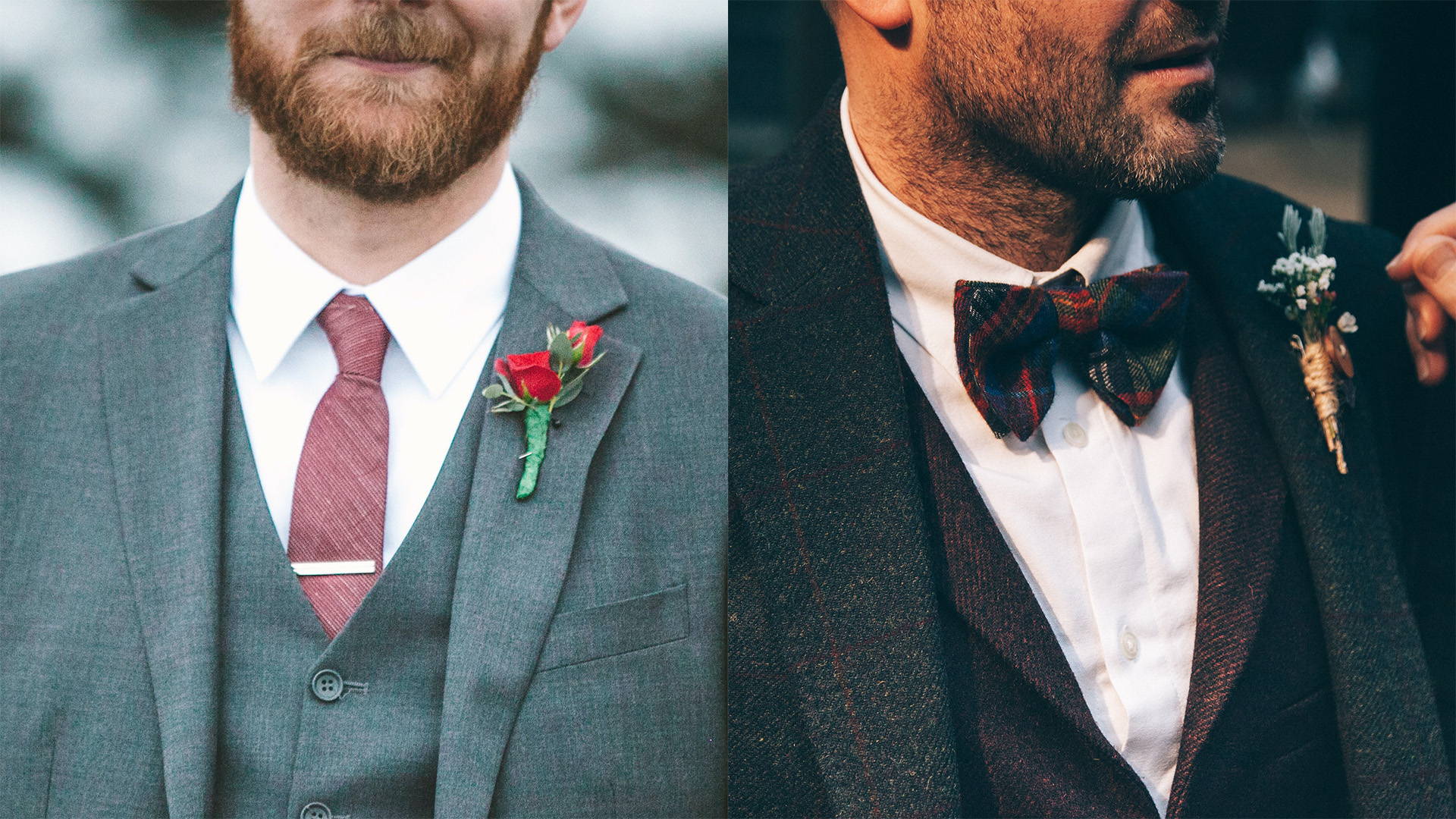
One of the most common menswear questions is whether to wear a necktie or a bow tie. While both serve the same basic purpose, they send very different style messages.
This guide explains the differences between neckties and bow ties, their formality levels, and exactly when each option is appropriate.
Why the Choice Between Necktie and Bow Tie Matters
Ties are not just accessories—they signal formality, personality, and intent. Choosing the wrong type of tie can make you look overdressed or underdressed.
Before focusing on accessories, ensure your suit fits correctly. If needed, review How a Suit Should Fit.
What Is a Necktie?
A necktie is a long fabric tie worn around the neck, knotted at the collar and hanging down the chest. It is the most common and versatile tie option.
Why Neckties Are So Popular
- Appropriate for most occasions
- Available in endless colors and patterns
- Works with business, formal, and social outfits
What Is a Bow Tie?
A bow tie is a short tie tied into a symmetrical bow at the collar. It is traditionally associated with formalwear and special occasions.
Types of Bow Ties
- Self-tie bow tie (most formal)
- Pre-tied bow tie (convenient but less refined)
Formality Comparison: Necktie vs. Bow Tie
| Accessory | Formality Level | Best For |
|---|---|---|
| Necktie | Low to High | Business, weddings, daily wear |
| Bow Tie | High to Very High | Formal events, black tie |
When to Wear a Necktie
Business & Office Settings
Neckties are the default choice for professional environments. Solid or subtle patterned ties project confidence and authority.
Learn more about office dress codes in Business Professional vs. Business Casual.
Weddings (As a Guest or Groom)
Neckties are appropriate for most weddings, especially daytime or semi-formal ceremonies.
For groom styling ideas, see Wedding Suit Guide for Grooms.
Versatile Everyday Elegance
A necktie allows flexibility in color, texture, and knot style. It pairs easily with navy and charcoal suits.
If you're building your wardrobe, review Choosing Your First Suit Color.
When to Wear a Bow Tie
Black Tie Events
Black tie dress codes require a bow tie—never a necktie. Traditionally, this means a black silk bow tie with a tuxedo.
Learn the full rules in Black Tie Dress Code for Men.
Formal Weddings and Evening Events
Bow ties work well for formal evening weddings, especially when paired with a tuxedo or three-piece suit.
Personal Style Statements
Bow ties can signal individuality and confidence, but they must be worn intentionally and appropriately.
Matching Ties with Suit Colors
Both neckties and bow ties should complement your suit color.
- Navy suits → Burgundy, navy, patterned ties
- Gray suits → Blue, purple, silver tones
- Black suits → Black bow ties or dark solid neckties
For footwear harmony, review Shoe & Suit Color Combinations.
Necktie Knots vs. Bow Tie Styles
Neckties offer variety through different knots, while bow ties rely more on fabric and proportion.
- Necktie knots: Four-in-Hand, Half Windsor, Full Windsor
- Bow tie styles: Butterfly, Batwing, Diamond-point
Common Tie Mistakes to Avoid
- Wearing a bow tie to casual daytime events
- Choosing novelty designs that look gimmicky
- Poorly tied or uneven knots
- Mismatched formality levels
Quick Decision Guide
- Business meeting → Necktie
- Job interview → Necktie
- Daytime wedding → Necktie
- Black tie event → Bow tie
- Formal evening wedding → Bow tie
Conclusion
Neckties are versatile, practical, and suitable for most occasions. Bow ties are reserved for formal settings and intentional style statements.
Understanding when to wear each ensures you always look appropriate, confident, and well-dressed.
Disclaimer: This article is for educational purposes only. Tie preferences may vary by culture and event formality.