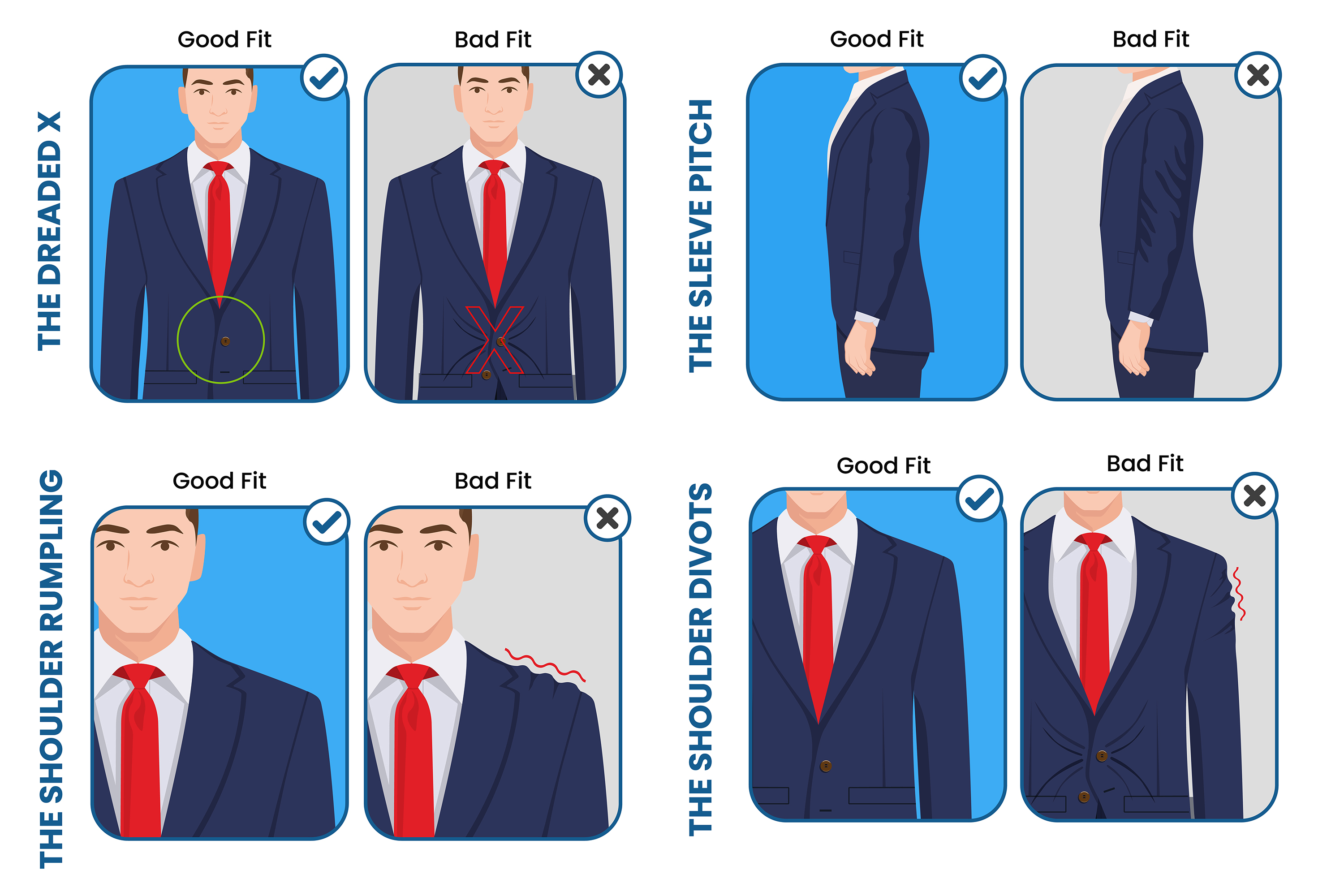
A well-fitted suit is the foundation of sharp style. Even the most expensive suit will look wrong if it doesn’t fit properly. This visual fit checklist shows you exactly how a suit should fit—from head to toe.
Whether you’re buying off-the-rack or going custom, use this guide to instantly identify fit issues and know what can (and can’t) be tailored.
Why Proper Suit Fit Matters
Fit determines how polished, confident, and professional you look. A suit that fits well enhances posture, balances proportions, and communicates attention to detail.
Before continuing, make sure you understand your measurements with our Ultimate Suit Sizing Guide.
The Suit Fit Checklist (Top to Bottom)
1. Shoulder Fit (The Most Important Rule)
Shoulders are the hardest and most expensive part to alter. If the shoulders don’t fit, walk away.
- Shoulder seam sits exactly at the shoulder edge
- No divots or collapsing fabric
- No pulling or overhang
Learn more about jacket construction in The Anatomy of a Suit.
2. Jacket Chest and Button Closure
Button the jacket while standing naturally. The fabric should lie flat without pulling or excess looseness.
- No X-shaped pulling across the chest
- No large gaps between buttons
- Comfortable breathing and movement
3. Jacket Length
Jacket length affects balance and proportion. A properly fitted jacket should cover your seat.
- Jacket hem reaches mid-crotch
- Covers the backside when viewed from the side
- Not cropped or overly long
4. Sleeve Length
Sleeve length should reveal a small amount of shirt cuff. This detail signals refinement and precision.
- ¼ to ½ inch of shirt cuff visible
- Sleeves end at wrist bone
5. Jacket Collar
The jacket collar should hug the shirt collar cleanly. Any gap is a sign of poor fit.
- No collar gap between jacket and shirt
- Collar lies flat at the back of the neck
6. Lapels and Button Stance
Lapels should lie flat against the chest and match your body scale. The button stance should feel natural—not too high or too low.
Learn correct jacket behavior in The Jacket Buttoning Rules Guide.
7. Waist Suppression
A suit jacket should subtly taper at the waist to create shape. It should follow your body without clinging.
- No billowing fabric at the sides
- No tight pulling around the waist
8. Trouser Waist Fit
Trousers should sit comfortably at your natural waist without needing a belt to stay up.
- No gaping at the back
- No tight pressure when sitting
9. Seat and Rise
The seat should drape smoothly without excess fabric or pulling. Proper rise ensures comfort and clean lines.
- No sagging or pulling under the seat
- Smooth drape from waist to thigh
10. Trouser Leg Fit
Trouser legs should fall straight without clinging to the calves. Avoid extreme tapering.
- Straight or slightly tapered cut
- No pulling across thighs or knees
11. Trouser Length and Break
Trouser length determines how polished your suit looks. Most men benefit from a slight or half break.
See examples in The Trouser Break Guide.
How Fit Changes by Body Type
Fit guidelines vary depending on your body shape.
- Skinny builds: Suiting Guide for Skinny Men
- Big & tall builds: Suiting Guide for Big & Tall Men
Off-the-Rack vs. Tailored Fit
Off-the-rack suits are designed for averages. Tailoring fine-tunes length, waist suppression, and sleeve fit.
For a deeper comparison, read Made-to-Measure vs. Off-the-Rack vs. Bespoke.
Common Suit Fit Mistakes
- Buying oversized suits for comfort
- Ignoring shoulder fit
- Trousers that are too short
- Overly tight, trendy cuts
Final Fit Checklist (Quick Scan)
- Shoulders align perfectly
- Jacket buttons smoothly
- Sleeves show shirt cuff
- Trousers drape cleanly
- Overall silhouette feels balanced
Conclusion
Knowing how a suit should fit gives you instant confidence when shopping or tailoring. Use this visual checklist every time you try on a suit.
A proper fit transforms your appearance more than brand or price ever could.
Disclaimer: This article is for educational purposes only. Fit preferences may vary by style and tailoring philosophy.