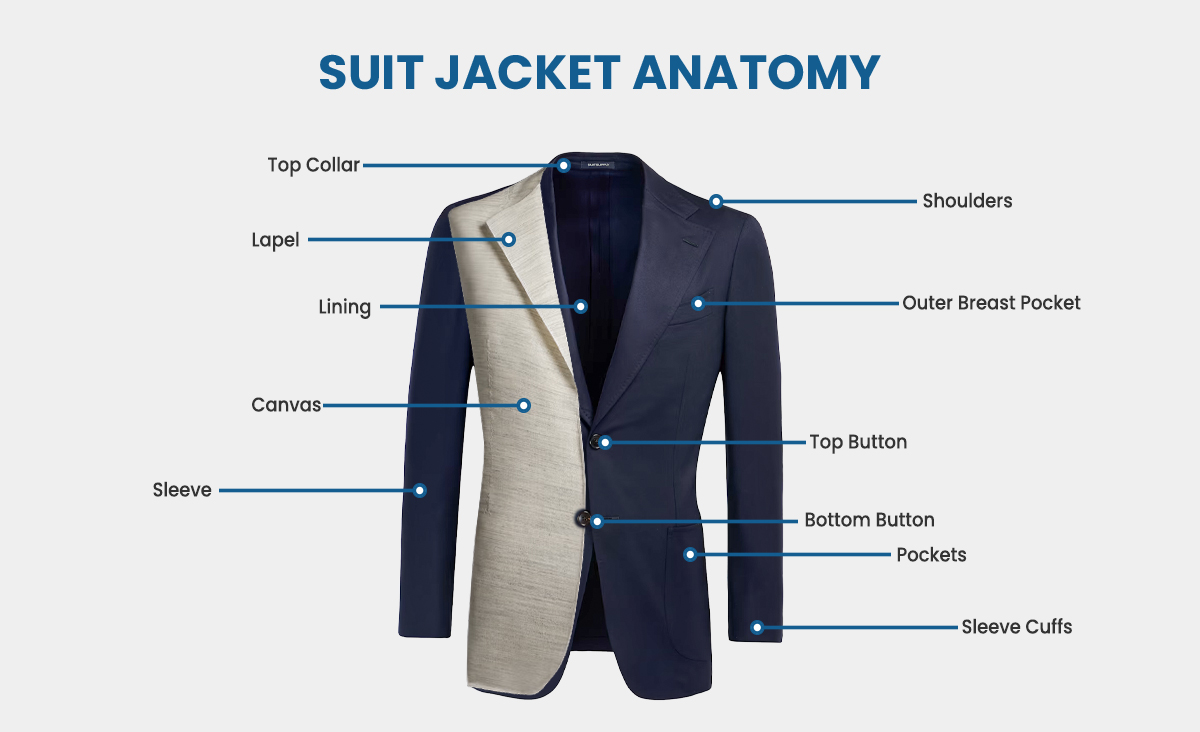
To the untrained eye, most suits look the same. But once you understand the anatomy of a suit, you’ll notice that small details like lapels, vents, and cuffs dramatically affect how a suit looks, feels, and performs.
Knowing these components will help you choose the right suit for your body type, occasion, and personal style. This guide breaks down every essential part of a suit—clearly and practically.
What Does “Suit Anatomy” Mean?
Suit anatomy refers to the individual components that make up a suit and how they work together. Each element has a functional purpose and a stylistic impact.
When combined with proper fit, these details determine whether a suit looks refined or sloppy. If fit is new to you, start with our Complete Suit Fit & Sizing Guide for Men.
The Suit Jacket: Core Components
Lapels
Lapels are the folded flaps of fabric on the front of the jacket. They frame your chest and face, making them one of the most visually important parts of a suit.
Types of Lapels
| Lapels | Description | Best For |
|---|---|---|
| Notch Lapel | Small cut where lapel meets collar | Business suits, everyday wear |
| Peak Lapel | Points upward toward shoulders | Formal suits, weddings |
| Shawl Lapel | Smooth, rounded edge | Tuxedos and black-tie events |
Peak and shawl lapels are commonly seen on tuxedos. Learn more about formalwear differences in our guide on Suit vs. Blazer vs. Tuxedo.
Collar
The collar runs around the back of the neck and connects the lapels. A properly fitting collar should sit flush against your shirt collar without gaps.
A visible gap between the suit collar and shirt collar usually indicates poor fit.
Shoulders
Shoulder construction defines the overall structure of a suit. This is the most important area for fit and the hardest to alter.
- Structured shoulders: Formal and authoritative
- Soft shoulders: Relaxed and natural
If the shoulders don’t fit, choose another size. Tailors cannot fix major shoulder issues.
Buttons & Button Stance
Buttons affect both style and functionality. Most modern suits feature a two-button configuration.
Proper buttoning matters. Follow the classic rules explained in Suit Jacket Buttoning Rules.
Vents
Vents are the slits at the back of the jacket that allow movement and improve drape.
| Vent Type | Description | Style Level |
|---|---|---|
| No Vent | Clean back, limited movement | Formal |
| Single Vent | One slit in center | Classic |
| Double Vent | Two side slits | Modern & functional |
Double vents provide the best mobility and are common in contemporary tailoring.
Pockets
Jacket pockets may seem minor, but they influence the formality of a suit.
- Flap pockets: Standard business suits
- Jetted pockets: Formal suits and tuxedos
- Patch pockets: Casual suits and blazers
Pocket squares add personality. Learn how to style them in our Pocket Square Folding Guide.
Cuffs (Sleeve Finish)
Suit jackets do not have cuffs like trousers, but sleeve buttons deserve attention.
- Three or four buttons are standard
- Working buttons indicate higher craftsmanship
The Suit Trousers: Key Elements
Waistband & Rise
The rise determines where trousers sit on your waist. A medium rise offers the most balanced look for most men.
Leg Shape
Trousers should follow your leg without clinging. Slim does not mean tight.
Trouser length affects appearance significantly. For a full breakdown, read our Trouser Break Guide.
Cuffs (Turn-Ups)
Trouser cuffs are folded fabric at the hem. They add visual weight and are best suited for taller men.
The Vest (Waistcoat)
A vest adds formality and structure to a suit. It is most commonly seen in three-piece suits.
When wearing a vest, the bottom button should remain unfastened. Learn more in our guide on How to Wear a 3-Piece Suit.
Why Suit Anatomy Matters
Understanding suit anatomy helps you:
- Choose the right suit for each occasion
- Communicate better with tailors
- Avoid costly mistakes
- Build a refined wardrobe
Anatomy and fit go hand in hand. Fabric also plays a major role—see our guide on Best Suit Fabrics for Every Season.
Conclusion
A great suit is not defined by one feature, but by how all its parts work together. Lapels, vents, cuffs, and construction details may seem subtle, but they collectively define the suit’s character.
Once you understand the anatomy of a suit, you’ll never look at menswear the same way again.
Disclaimer: This article is for educational purposes only. Suit styles and preferences may vary by culture and personal taste.