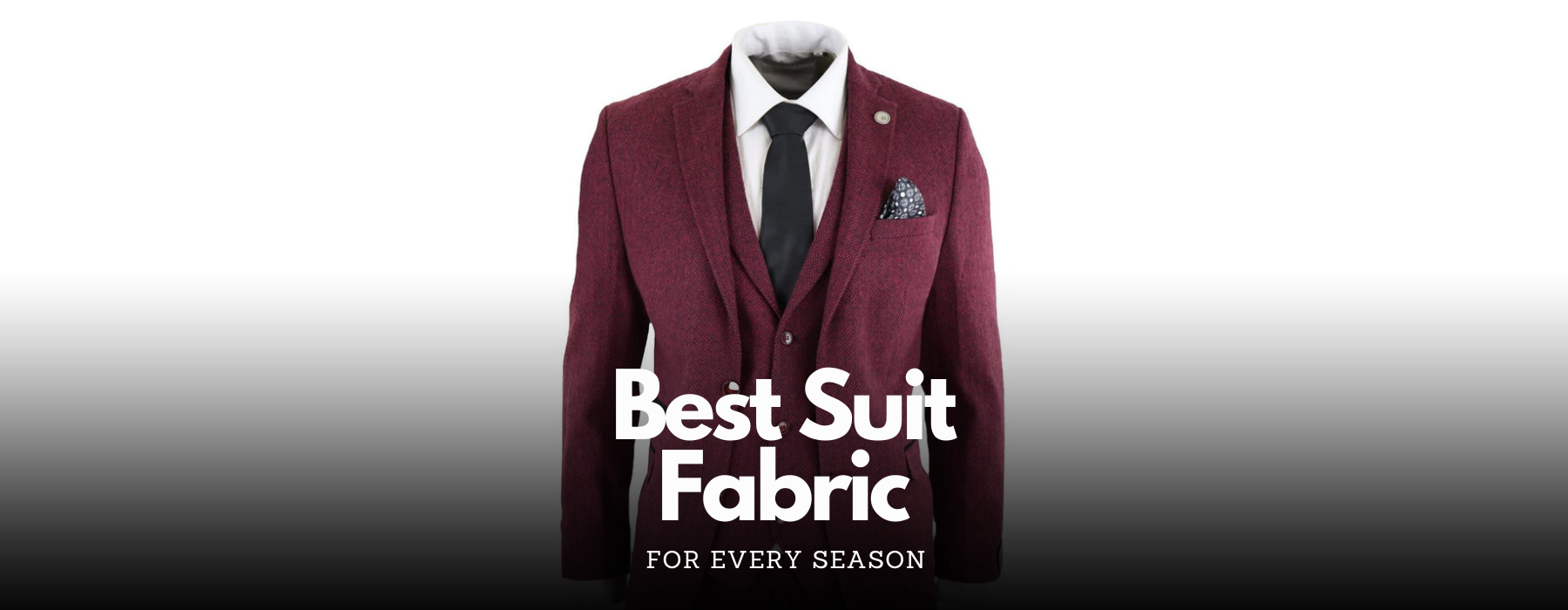
Choosing the right suit fabric is just as important as choosing the right fit. Even a perfectly tailored suit can feel uncomfortable if the fabric doesn’t match the season.
In this guide, we break down the best suit fabrics for every season, explaining how each material looks, feels, and performs in different climates.
Why Suit Fabric Matters
Suit fabric affects breathability, durability, drape, and overall appearance. It also determines whether a suit feels light and airy or warm and structured.
Before diving into fabrics, make sure you understand how a suit should fit. If not, start with our Complete Suit Fit & Sizing Guide for Men.
Wool: The Most Versatile Suit Fabric
Wool is the gold standard of suit fabrics. It is breathable, durable, wrinkle-resistant, and suitable for all seasons.
Types of Wool Used in Suits
| Wool Type | Characteristics | Best For |
|---|---|---|
| Merino Wool | Soft, breathable, smooth texture | Year-round suits |
| Worsteds | Tightly woven, crisp finish | Business & formal wear |
| Flannel | Brushed surface, warm | Fall & winter suits |
| Tropical Wool | Lightweight, open weave | Spring & summer |
If you only own one suit, a mid-weight wool suit is the safest and most versatile choice.
Cotton: Casual and Breathable
Cotton suits are lighter and more casual than wool. They offer excellent breathability but wrinkle more easily.
When to Wear a Cotton Suit
- Warm weather
- Smart-casual settings
- Daytime events
Cotton suits pair well with relaxed tailoring. They are often styled more like blazers than formal business suits.
Learn how cotton compares to other garments in our guide on Suit vs. Blazer vs. Tuxedo.
Linen: The Ultimate Summer Fabric
Linen is one of the most breathable fabrics available. It allows air to flow freely, making it ideal for hot and humid climates.
Pros and Cons of Linen Suits
| Pros | Cons |
|---|---|
| Extremely breathable | Wrinkles very easily |
| Lightweight | Less formal appearance |
| Relaxed drape | Limited structure |
Wrinkles are part of linen’s charm. Linen suits are best suited for beach weddings, summer parties, and casual elegance.
Silk and Luxury Blends
Silk is rarely used alone in suits. Instead, it is blended with wool to add sheen and softness.
Wool-silk blends are often used for special occasions and evening wear. However, they require more care and are less durable than pure wool.
Synthetic Fabrics: Polyester & Rayon
Synthetic fabrics are commonly found in budget suits. While affordable, they lack breathability and comfort.
Avoid 100% polyester suits if possible. Instead, look for blends where synthetics make up a small percentage.
Season-by-Season Fabric Guide
| Season | Recommended Fabrics | Why |
|---|---|---|
| Spring | Light wool, cotton blends | Balanced warmth and breathability |
| Summer | Linen, tropical wool | Maximum airflow |
| Fall | Mid-weight wool | Comfortable temperature control |
| Winter | Flannel, heavier wool | Warmth and structure |
Fabric Weight and Super Numbers Explained
You may see labels like Super 100s, Super 120s, or Super 150s. These numbers indicate the fineness of the wool fiber.
- Super 100s–120s: Durable, ideal for daily wear
- Super 130s–150s: Softer, more luxurious
- Super 160s+: Very delicate, special occasions only
Higher numbers feel softer but wrinkle faster and wear out sooner.
How Fabric Affects Suit Structure
Fabric choice impacts how a suit drapes on the body. Heavier fabrics provide structure, while lighter fabrics feel relaxed.
To understand how fabric works with construction details, read our guide on The Anatomy of a Suit.
Choosing the Right Fabric for Your Lifestyle
Ask yourself the following:
- How often will I wear this suit?
- In what climate?
- For business or special occasions?
If versatility is your priority, wool remains unmatched. For comfort in heat, linen and cotton excel.
Conclusion
The best suit fabric depends on season, occasion, and personal comfort. Wool remains the most versatile option, while linen and cotton shine in warmer months.
When fabric and fit work together, a suit not only looks better—but feels better.
Disclaimer: This article is for educational purposes only. Fabric preferences may vary based on climate and personal style.