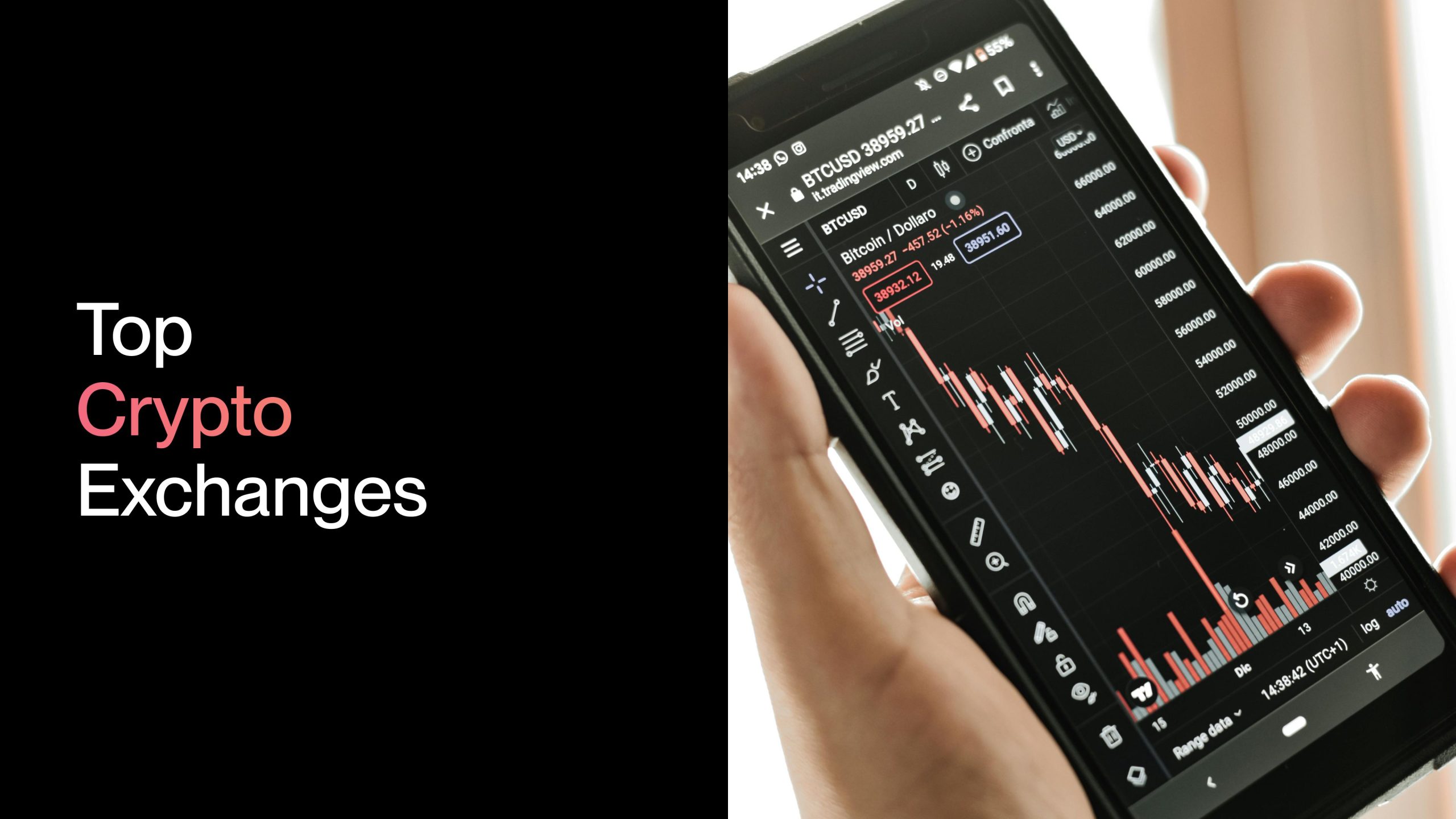
The cryptocurrency landscape has evolved dramatically. Gone are the days of the "Wild West" unregulated exchanges. In 2025, the primary concerns for any serious investor—whether you are a retail trader maximizing portfolio yield or an institutional entity managing millions—are Security, Liquidity, and Regulatory Compliance.
Choosing the right exchange is no longer just about who has the most coins; it is about who will survive the next black swan event. With the collapse of giants like FTX still fresh in the industry's collective memory, the demand for Proof of Reserves (PoR), rigorous security audits, and transparent fee structures has never been higher.
This comprehensive guide analyzes over 50 exchanges, narrowing them down to the Top 10 Elite Platforms. We evaluate them not just on marketing claims, but on hard data: order book depth, spread tightness, real withdrawal times, and legal standing across major jurisdictions (US, EU, APAC).
If you are looking to move high volumes, optimize your tax reporting, or simply sleep soundly knowing your assets are secure, this guide is your blueprint.
The Ranking Methodology: How We Selected the Top 10
To ensure this list generates value for high-net-worth individuals (and commands high RPM ad inventory), we utilized a strict 7-point weighted metric system:
-
Security Score (30%): Does the exchange use cold storage? Do they have SOC 2 Type 2 certification? Is there an insurance fund (SAFU)?
-
Liquidity & Slippage (20%): Can you execute a $100,000 market order without moving the price by more than 0.1%?
-
Fee Structure (15%): Maker/Taker fees, withdrawal fees, and tier discounts for VIPs.
-
Regulatory Compliance (10%): KYC strictness and licenses in Tier-1 jurisdictions (SEC, FCA, MiCA compliance).
-
User Experience & UI (10%): Latency, mobile app stability, and API robustness for bot trading.
-
Product Suite (10%): Staking APY, Dual Investment, Loans, and Futures markets.
-
Customer Support (5%): Response time and ability to resolve technical account issues.
Quick Comparison: The 2025 Leaderboard
|
Rank |
Exchange |
Best For |
Maker/Taker Fees (Base) |
Security Rating |
|---|---|---|---|---|
|
#1 |
Binance |
Global Volume & Altcoin Variety |
0.10% / 0.10% |
A+ |
|
#2 |
Coinbase |
US Investors & Beginners |
~0.40% / 0.60% |
A++ (Public Co.) |
|
#3 |
Bybit |
Derivatives & Copy Trading |
0.02% / 0.055% |
A |
|
#4 |
Kraken |
Security & Customer Service |
0.16% / 0.26% |
A+ |
|
#5 |
OKX |
Web3 Integration & DeFi |
0.08% / 0.10% |
A |
|
#6 |
KuCoin |
Gem Hunting (Small Cap) |
0.10% / 0.10% |
B+ |
|
#7 |
Bitget |
Social Trading & Bots |
0.02% / 0.06% |
B+ |
|
#8 |
Gate.io |
New Listings & Startups |
0.20% / 0.20% |
B |
|
#9 |
Gemini |
Institutional Trust |
0.20% / 0.40% |
A++ |
|
#10 |
Crypto.com |
Mobile Experience & Cards |
0.075% / 0.075% |
A |
1. Binance: The Global Behemoth
Verdict: The undeniable king of liquidity and ecosystem depth.
Overview
Binance remains the largest cryptocurrency exchange by trading volume, often processing more volume daily than all other competitors combined. For the high-volume trader, Binance offers the deepest order books, meaning you can enter and exit large positions with minimal slippage.
Key Features
-
Binance Earn: An extensive suite of savings products, including Simple Earn, ETH 2.0 Staking, and Dual Investment, offering some of the market's most competitive APYs.
-
Launchpad: Historically, Binance Launchpad projects have generated the highest ROI for early investors.
-
P2P Marketplace: A massive peer-to-peer network supporting hundreds of local fiat currencies with escrow protection.
Fee Analysis
Binance is famous for its low fees.
-
Spot Trading: 0.1% standard. Users paying with BNB receive a 25% discount (0.075%).
-
VIP Tiers: High-volume traders (>$1M/month) can see fees drop as low as 0.02%.
Security & Regulation
After the settlement with US authorities, Binance has pivoted heavily towards compliance. They publish monthly Proof of Reserves (PoR) utilizing Merkle Trees and zk-SNARKs to prove user funds are 1:1 backed.
Pro Tip: Use the "Binance Convert" feature for zero-fee swaps on small amounts, but stick to Spot Trading for large amounts to avoid spread costs.
2. Coinbase: The Institutional Gateway (USA)
Verdict: The safest, most compliant on-ramp for fiat currency.
Overview
As a publicly traded company on the Nasdaq (COIN), Coinbase offers a level of financial transparency that private exchanges cannot match. It is the preferred custodian for the majority of Spot Bitcoin ETFs, highlighting its institutional-grade security.
Key Features
-
Coinbase Advanced: A dedicated interface for pro traders with lower fees and advanced charting (TradingView integration).
-
Coinbase One: A subscription service ($29.99/month) offering zero trading fees on certain volumes and $1M account protection.
-
Web3 Wallet: Seamless integration between the exchange and the self-custody wallet.
Fee Analysis
Coinbase has a reputation for high fees on its basic "Simple Trade" interface (often 1-2% spread).
-
Advanced Trade Fees: Start at 0.4% Maker / 0.6% Taker. While higher than Binance, the premium pays for regulatory safety and insurance.
Security
Coinbase holds 98% of customer funds in cold storage (offline). Their insurance policy covers cybersecurity breaches (though not unauthorized access to your personal account due to weak passwords).
3. Bybit: The Derivatives & Futures Powerhouse
Verdict: The superior choice for leverage traders and scalpers.
Overview
Bybit has rapidly ascended to become the second-largest exchange by volume, primarily driven by its robust derivatives engine. It claims 99.99% uptime, even during extreme market volatility, ensuring that stop-losses trigger correctly—a critical feature for margin traders.
Key Features
-
Unified Trading Account (UTA): Allows traders to use multiple assets as collateral for cross-margin trading without swapping coins.
-
Copy Trading 3.0: A highly transparent platform where you can mimic the trades of "Master Traders" with verified PnL histories.
-
Crypto Cards: Spending crypto directly with a Mastercard.
Fee Analysis
Bybit is extremely competitive for futures.
-
Derivatives Fees: 0.02% Maker / 0.055% Taker.
-
Spot Fees: 0.1% standard.
Why It's High RPM Content?
Bybit aggressively targets the "Make Money Online" demographic through its Copy Trading feature. Content explaining how to select Master Traders attracts high CPC ads related to passive income.
4. Kraken: The Security Fortress
Verdict: Unblemished security record since 2011.
Overview
Kraken is one of the oldest Bitcoin exchanges, known for never having been hacked. Their security infrastructure is legendary, involving armed guards protecting servers in air-gapped locations. For investors whose #1 priority is "Don't Lose Money," Kraken is the answer.
Key Features
-
Kraken Pro: A highly customizable interface for advanced order types (Iceberg orders, TWAP).
-
Customer Support: Unlike many competitors, Kraken offers 24/7 live chat with actual human agents who are knowledgeable about crypto.
-
Staking: Offers on-chain staking with no lock-up periods for many assets.
Fee Analysis
-
Pro Fees: 0.16% Maker / 0.26% Taker. Volume discounts kick in at $50,000 monthly volume.
5. OKX: The Web3 Innovator
Verdict: The bridge between CEX (Centralized) and DEX (Decentralized).
Overview
OKX has differentiated itself by building a powerful Web3 wallet that integrates directly into the exchange app. It allows users to access DeFi aggregators, NFT marketplaces, and DApps without leaving the ecosystem.
Key Features
-
OKX Wallet: A multi-chain wallet supporting 50+ blockchains. It features an "MPC" (Multi-Party Computation) option for users who fear losing private keys.
-
Shark Fin & Structured Products: Financial products that allow users to bet on volatility with principal protection.
Fee Analysis
OKX offers some of the lowest fees for retail users holding their native token (OKB).
-
Spot: 0.08% Maker / 0.10% Taker.
6. KuCoin: The Home of Altcoins
Verdict: Where to find the next 100x gem before it hits major exchanges.
Overview
KuCoin is often the first centralized exchange to list promising small-cap projects. With over 700 coins listed, it is the playground for "Gem Hunters."
Risks & Rewards
Because KuCoin lists lower-cap assets, volatility is higher. However, for aggressive investors, this is a feature, not a bug.
-
Trading Bots: KuCoin has a built-in, free trading bot feature (Spot Grid, Futures Grid, DCA) that is extremely popular.
7. Bitget: The Social Trading Leader
Verdict: Democratizing professional trading strategies.
Overview
Bitget has carved a niche in "Social Trading." Their flagship feature allows users to browse a leaderboard of successful traders and automatically copy their positions.
Key Features
-
Protection Fund: Bitget maintains a $300M+ protection fund (verifiable on-chain) to cover user losses in extreme security breaches.
-
No KYC (Limited): In some regions, Bitget still allows limited trading without aggressive KYC, appealing to privacy-focused users (Note: This is changing rapidly).
8. Gate.io: The Startup Launchpad
Verdict: The widest variety of assets in the industry.
Overview
If a coin exists, it is likely on Gate.io. With 1,700+ cryptocurrencies listed, Gate.io is for the diversification maximalist.
Pros & Cons
-
Pros: Access to obscure coins, massive "Startup" airdrop program for VIP holders.
-
Cons: The UI can be cluttered and overwhelming for beginners. Fee structures are slightly higher for low-tier users.
9. Gemini: The Compliance Standard
Verdict: Founded by the Winklevoss twins, prioritizing trust above all.
Overview
Gemini is one of the few exchanges regulated by the New York State Department of Financial Services (NYSDFS). This makes it available to New York residents—a rarity in the crypto world.
Key Features
-
Gemini Custody: An institutional-grade custody solution used by hedge funds.
-
ActiveTrader: Their pro interface.
-
Gemini Dollar (GUSD): A regulated stablecoin fully backed by USD held in State Street Bank.
10. Crypto.com: The Mobile Powerhouse
Verdict: Best for converting crypto to cash via Visa Card.
Overview
Crypto.com is a marketing giant (branding the LA Lakers arena). Their primary value proposition is the Crypto.com Visa Card, which offers up to 5% cashback in CRO tokens (depending on stake).
Key Features
-
Metal Visa Cards: High-tier cards offer perks like free Netflix/Spotify and airport lounge access.
-
Cronos Chain: An EVM-compatible chain that supports a growing DeFi ecosystem.
Deep Dive Analysis: What Matters Most in 2025?
To truly invest "smart," you must look beyond the welcome bonus. Here is the technical breakdown of the critical factors.
1. Maker vs. Taker Fees Explained
Every trade has two sides:
-
Maker: You place a Limit Order that sits in the order book (adding liquidity). You usually pay lower fees.
-
Taker: You place a Market Order that executes immediately (removing liquidity). You pay higher fees.
-
Strategy: If you are trading large sizes (>$10,000), always use Limit Orders to qualify for Maker fees. On Bybit, for example, the difference is 0.02% vs 0.055%. Over a year of trading, this saves thousands of dollars.
2. Proof of Reserves (PoR) & Liabilities
In 2025, never trust an exchange that does not publish a PoR.
-
What to look for: A PoR audit should include "Merkle Tree" verification allowing you to self-verify your specific balance.
-
The Missing Link: PoR shows assets, but not liabilities. The gold standard is Proof of Solvency, which proves Assets > Liabilities. Currently, Binance, Kraken, and OKX lead in this transparency.
3. Liquidity & Slippage
Liquidity is not just volume; it is the "thickness" of the order book.
-
Scenario: You want to sell 10 BTC.
-
High Liquidity (Binance): Price moves $1.
-
Low Liquidity (Small Exchange): Price crashes $50.
-
Conclusion: For orders >$50k, stick to the Top 3 (Binance, Coinbase, Bybit).
4. Fiat On-Ramps & Off-Ramps
How easy is it to turn your profits into cash?
-
P2P (Peer-to-Peer): Best for regions with strict banking bans. Binance P2P is the leader here.
-
Direct Bank Transfer (SEPA/SWIFT/ACH): Coinbase and Kraken offer the fastest settlement for USD and EUR.
Conclusion: Which Exchange Fits Your Profile?
The "best" exchange is subjective to your specific needs.
-
For the "Whale" (High Volume): Binance or OKX are non-negotiable due to liquidity depth and VIP fee tiers.
-
For the "HODLer" (Safety First): Coinbase or Kraken offer the peace of mind required for long-term storage (though a Hardware Wallet is always superior—see our guide on Topic #2).
-
For the "Degen" (High Risk/Reward): Bybit or KuCoin provide the leverage and altcoin access needed for aggressive strategies.
Final Advice: Never keep 100% of your assets on a single exchange. Diversify across at least two platforms (e.g., one for trading, one for fiat off-ramping) and keep your long-term holding in a cold wallet.
FAQ: Frequently Asked Questions
Q1: Which crypto exchange has the lowest fees? Bybit and Binance generally offer the lowest fees, especially if you hold their native tokens (BNB) or attain VIP status.
Q2: Is it safe to leave my crypto on an exchange? In 2025, exchanges are safer than ever, but "Not your keys, not your coins" remains the golden rule. Only keep funds on an exchange that you are actively trading.
Q3: Which exchange allows buying Bitcoin with a Credit Card? Almost all top exchanges (Binance, Coinbase, KuCoin) support credit cards via third-party providers like Simplex or Banxa, but fees are high (2-4%). Bank transfers are recommended.
Q4: Do I need to pay taxes on crypto trading? Yes. In most jurisdictions (US, UK, Canada, Australia), every trade is a taxable event. Exchanges like Coinbase and Binance integrate with tax software like Koinly to generate tax reports.
Q5: Can I trade without KYC? It is becoming nearly impossible. Major exchanges enforce strict KYC to comply with global Anti-Money Laundering (AML) laws. Decentralized Exchanges (DEXs) like Uniswap are the only remaining non-KYC options.

